Understanding the main influences and driving factors behind how a phone’s price is determined.
Introduction
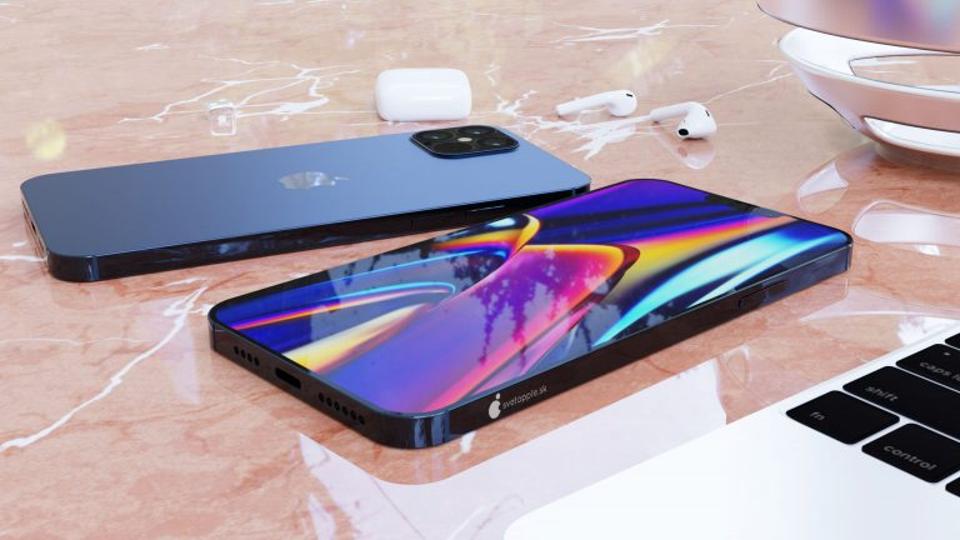
If you made it this far it means you were not completely turned off by my terrible attempt to use a pun in the title and I thank you for that. This blog will probably be pretty quick I think. Recently, I have been seeing some buzz about the phone pictured above; the alleged iPhone 12. While every new iPhone release and update is exciting (yes – I like Apple and have never had an android), I have long been of the opinion that there hasn’t been too much major innovation in cell phones in recent years. While there have been new features added or camera upgrades, there are few moments that stick out as much as when Siri was first introduced. (I remember when I tried to use voice recognition on my high school phone before everyone had an iPhone). Let’s look at the following graph for a second:
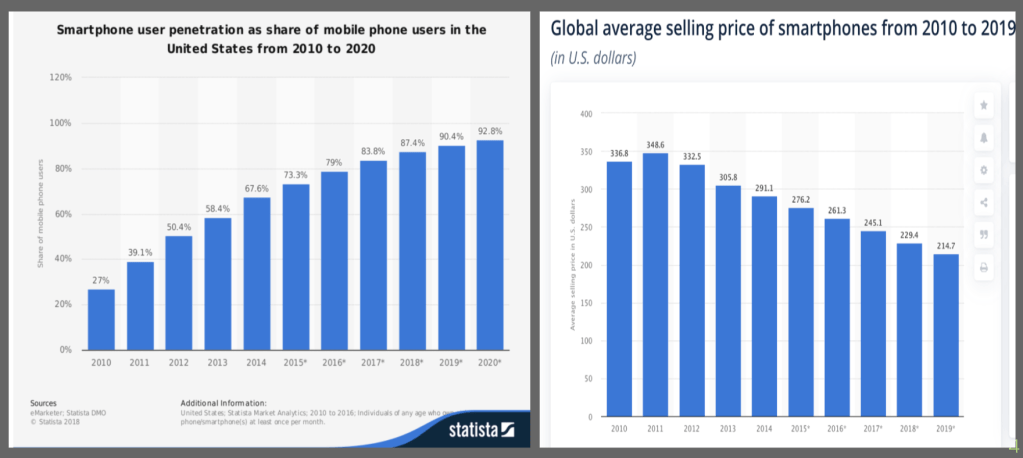
The graph above indicates that as popularity in smartphones has gone up, prices have declined. I think that there are many influences here, but surely the lack of major innovation is one reason why no one is capitalizing on this obvious trend and creating phones that are allowed to be more expensive because of what they bring to the table. This led me to my next question; what actually drives phone pricing? iOS 9 still sticks out to me all these years later because I loved the music app. However, it could be that others care nothing about the music app and are more interested in other features like camera quality and I was really interested in seeing what actually mattered. Conveniently, I was able to find some data from kaggle.com and could investigate further.
Data Preparation
I mentioned my source: kaggle.com. My data contained the following features as described by kaggle.com (I’ll add descriptions in parentheses when needed but also present the names as they appear in the data): battery_power, blue (presence of bluetooth), clock_speed (microprocessor speed), dual_sim (dual sim support or not), fc (front camera megapixels), four_g (presence of 4G), int_memory (storage), m_dep (mobile depth in cm), n_cores (number of cores of processor), pc (primary camera megapixels), px_height (pixel resolution height), px_width, ram, sc_h (screen height), sc_W (screen_width), talk_time (longest possible call before battery runs out), three_g (presence of 3G), touch_screen, wi_fi. The target feature is price range which consists of 4 classes each representing an increasing general price range. In terms of filtering out correlation – there was surprisingly no high correlation to filter out.
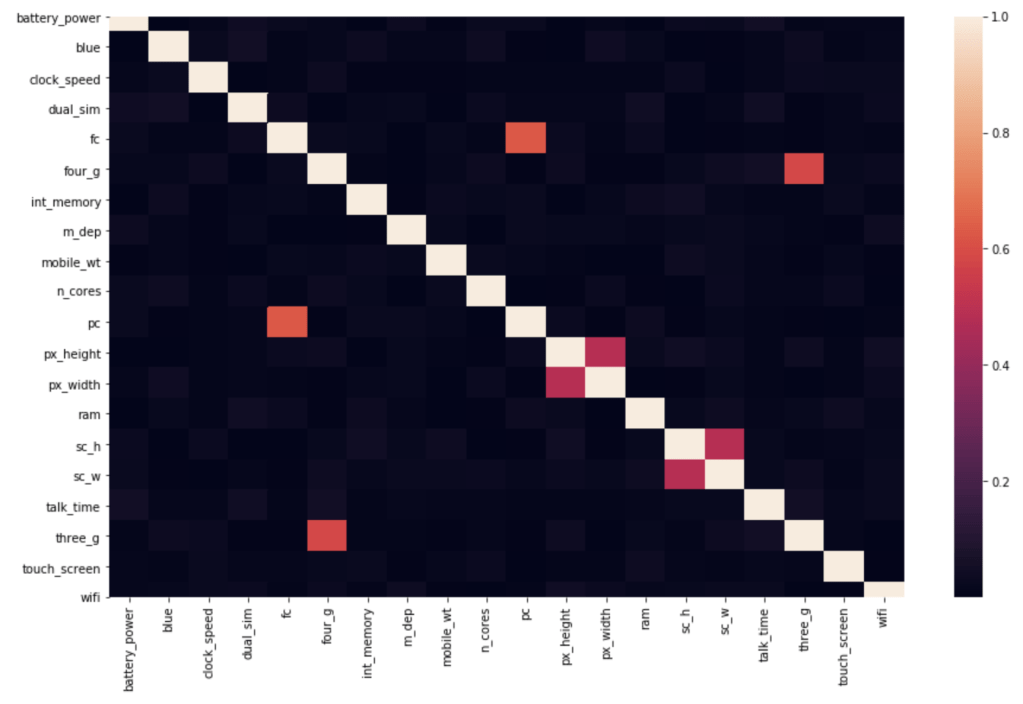
There were some other basic elements of data preparation that are not very exciting so will not be described here. I would like to point out one weird observation, though:
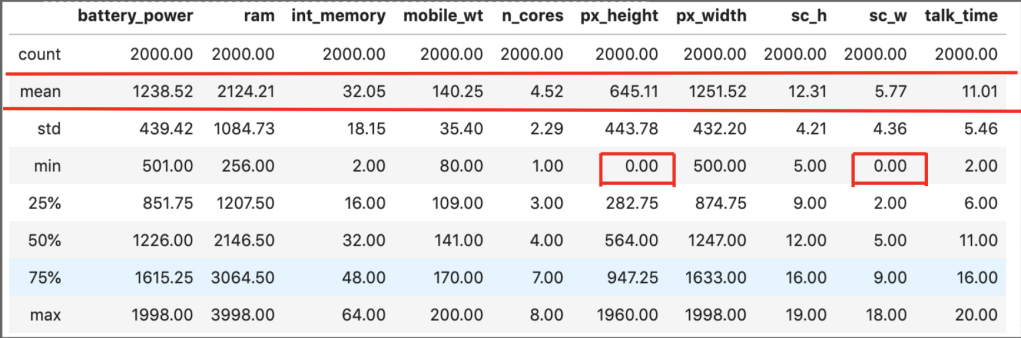
In those two smaller red boxes, it appears that some phones have a screen width of zero. That doesn’t really make any sense.
Model Data
I ran a coupe different models and picked the logistic regression model because it worked best. You may notice that when I post my confusion matrix and metrics that precision = recall = f1 = accuracy. That is always the case with evenly balanced data. Even after filtering outliers I had a strong balance in my target class.
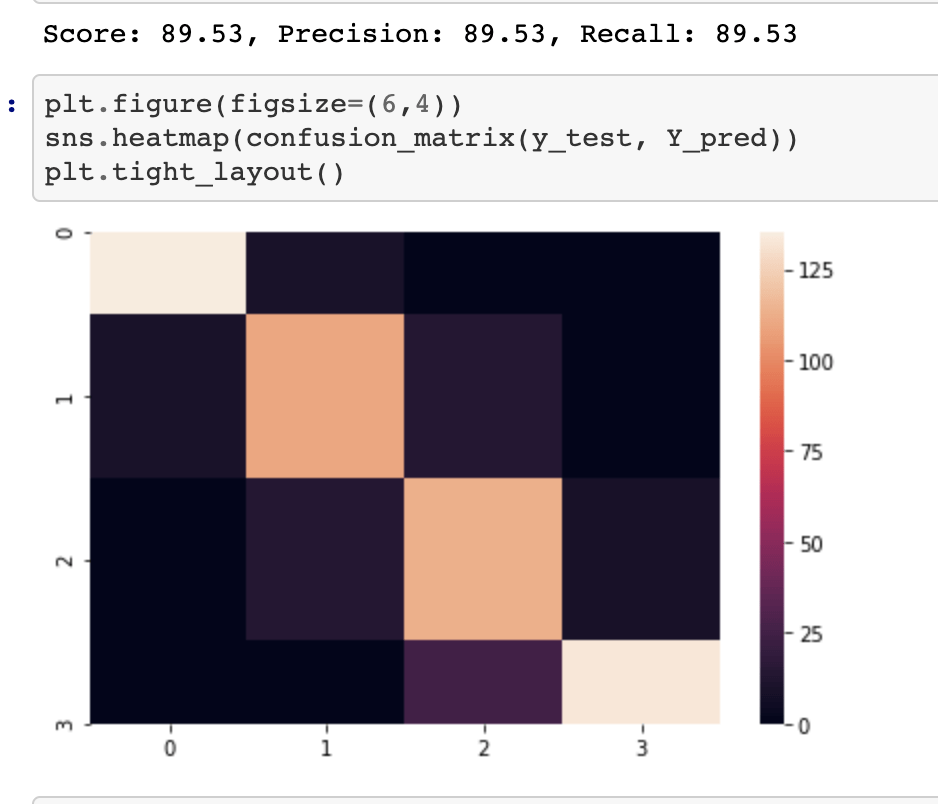
In terms of determining what drives pricing by using coefficients determined in logistic regression:
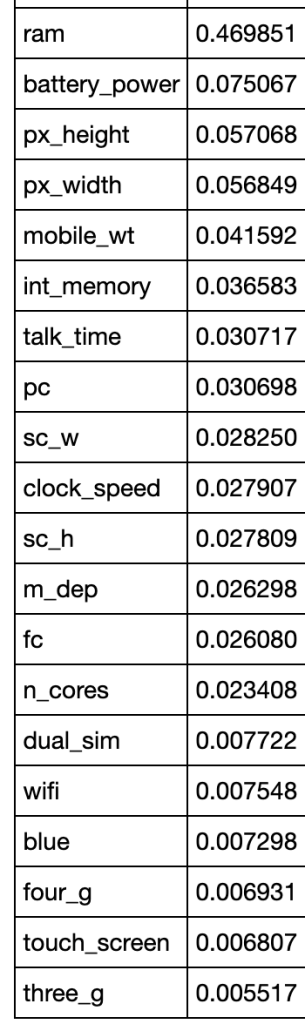
I think these results make sense. At the top you see things like RAM and battery power. At the bottom you see things like touch screen and 3G. Almost every phone includes these features nowadays an there is nothing special about a phone having those features.
Conclusion
We now have an accurate model that can classify the price range of any phone given it’s features and we also know what features have the biggest impact on price. If companies are stuck on innovation, they could just keep upping the game with things like higher RAM, I suppose. I think the next step in this project is to collect more data on other features not yet included but to also take a closer look at what the specific differences in each iteration of the iPhone were as well as how the operating systems they run on have evolved. I actually saw a video today about iOS 14 and it doesn’t look to be that innovative. Although, I am curious to see what will happen as Apple begins to develop their own chips in place of Intel ones. At the very least, we can use the model established here as a baseline to be able to understand what will allow companies to charge more for their phones in the absence of more impactful innovation.
Thanks for reading and have a great day!

 Inquiries